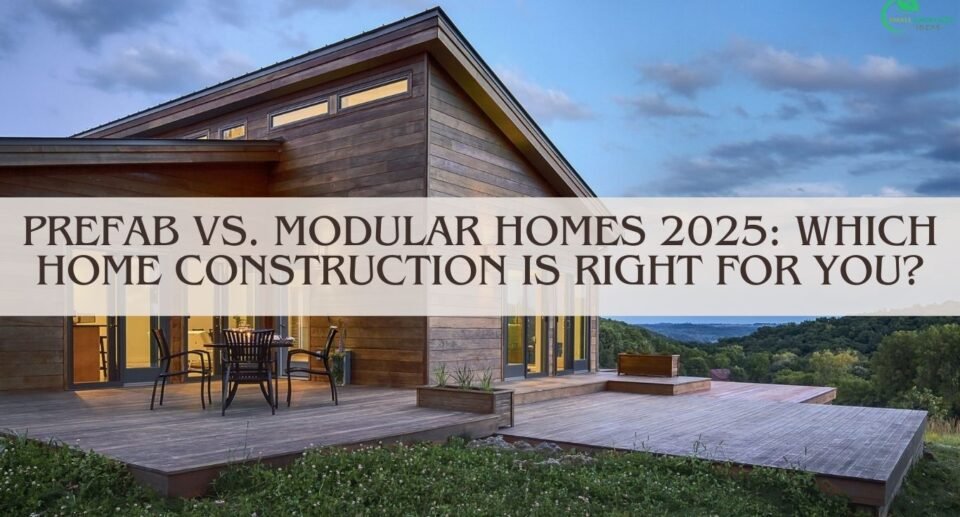
Prefab vs. Modular Homes 2025: Which Home Construction is Right for You?

smallbackyard_admin
- May 16, 2025
- 4 Min Read
Understanding Prefab Homes
What Are Prefab Homes?
Prefab, short for prefabricated homes, refers to homes that are built off-site in a factory setting and then transported to the final location for assembly. These home construction come in various types, including modular homes, panelized, kit, and mobile homes.
Key Characteristics of Prefab Homes:
- Built off-site in a controlled factory environment.
- Available in various styles, from tiny houses to full-size family homes.
- Lower home construction costs compared to traditional homes.
Pros of Prefab Homes
- Faster Construction: Prefab homes can be built in just a few months.
- Cost-Effective: Lower labor and material costs.
- Consistent Quality: Built in a controlled environment with consistent standards.
Cons of Prefab Homes
- Limited Customization: Prefab homes are typically built to pre-set designs.
- Land Costs: You must own land separately.
Transportation and Assembly Challenges: Larger units may face transport issues.
Understanding Modular Homes
What Are Modular Homes?
Modular homes are a specific type of prefab home that are built in sections, or modules, in a factory setting. These modules are then transported to the home construction site and assembled to create a complete home. While they are also prefabricated, they differ from other prefab options due to their modular structure.
Key Characteristics of Modular Homes:
- Built in sections (modules) that are assembled on-site.
- More customization options than other prefab homes.
- Typically stronger home construction due to their modular design.
Pros of Modular Homes:
- Customizable Design: Choose the number of modules and layout.
- Quick Assembly: Faster build time compared to traditional home construction.
- Lower Cost: Less expensive than stick-built homes.
Cons of Modular Homes:
- Land Costs: Like prefab homes, you must own land.
- Zoning Restrictions: Some areas may have strict rules for modular homes.
- Financing Challenges: May have fewer mortgage options than traditional homes.
Prefab vs. Modular Homes: Key Differences
- Customization: Modular homes offer more customization than most prefab homes.
- Cost: Both are cost-effective, but prefab homes are generally cheaper.
- Assembly: Modular homes arrive in larger sections, making them faster to assemble.
- Value: Modular homes may have slightly better resale value due to their durability.
Cost Comparison: Prefab vs. Modular Homes
Home Type | Average Cost per Sq. Ft. | Cost Range per Sq. Ft. |
Prefab Home | $40 – $300 | $30 – $500 |
Modular Home | $60 – $350 | $50 – $500 |
How to Choose Between Prefab and Modular Homes
- Consider Your Budget: Prefab homes are generally more affordable.
- Think About Customization: Choose modular homes if you want a more personalized layout.
- Review Local Regulations: Ensure your chosen type complies with local home construction codes.
- Evaluate Your Timeline: Modular homes can be faster to assemble.
Frequently Asked Questions
Q1: Are prefab and modular homes the same?
A: No, modular homes are a type of prefab home, but not all prefab homes are modular.
Q2: Are modular homes better than prefab homes?
A: It depends on your needs. Modular homes offer more customization, while prefab homes are generally cheaper.
Q3: Can I finance a prefab or modular home?
A: Yes, but financing options may be limited depending on the type of home and your lender.
Conclusion
Prefab vs. Modular Homes are both excellent options for anyone looking to begin a home construction project quickly and affordably.
These modern building methods offer efficient alternatives to traditional construction, often reducing build time and labor costs significantly.
Prefab homes are constructed in sections or panels at a factory and then transported to the site for assembly, while modular homes are built in complete modules and assembled like building blocks on your foundation.
Each method has its unique advantages, from faster timelines and eco-friendliness to greater customization options and long-term value.
By understanding their differences in construction process, cost, durability, and design flexibility, you can make an informed decision that suits your budget, lifestyle, and personal design preferences—whether you’re aiming for a minimalist cabin, a spacious family home, or an energy-efficient retreat.