Choosing the Best Plants for Your Garden: A Complete Guide

smallbackyard_admin
- May 28, 2025
- 5 Min Read
Creating a thriving garden starts with one crucial decision: selecting the right plants. Whether you’re cultivating a backyard oasis or a compact front yard bed, choosing the ideal plants can make or break your gardening efforts. From soil type and sunlight to aesthetics and maintenance, the process involves much more than just picking what looks good at the nursery.
In this complete guide, you’ll learn how to choose garden plants that suit your space, lifestyle, and local conditions. This article is ideal for beginners and seasoned gardeners alike, offering practical garden planning tips, a plant selection checklist, and top recommendations to get you started.
Why Plant Selection Matters
Picking the right plants for your garden isn’t just about beauty—it’s about balance. When you match your plant choices with your garden’s unique environment, you reduce water usage, prevent pests, and promote long-term health.
Here’s why proper plant selection is essential:
- Reduces maintenance and costs
- Improves soil health and biodiversity
- Boosts curb appeal and property value
- Supports local pollinators and wildlife
- Increases the likelihood of plant survival
Step 1: Understand Your Garden Space
Before you even look at plant tags or catalogs, evaluate your garden’s physical characteristics.
1. Sunlight
Track how much sunlight each section of your garden gets:
- Full Sun (6+ hours/day): Ideal for most flowering plants and vegetables.
- Partial Sun/Shade (3–6 hours/day): Best for ferns, hostas, and some herbs.
- Full Shade (<3 hours/day): Ferns, mosses, and shade-loving groundcovers thrive here.
2. Soil Type and pH
Test your soil’s texture (clay, sandy, loamy) and pH level (acidic, neutral, alkaline). You can use a simple soil test kit from a garden store.
- Loamy soil is ideal—well-draining and nutrient-rich.
- Sandy soil drains quickly but may lack nutrients.
- Clay soil retains moisture but can lead to root rot.
3. Drainage
After rain, check if water pools in your garden. Poor drainage can suffocate roots and attract pests.
Step 2: Define Your Garden Goals
Ask yourself: What do you want from your garden?
- Visual appeal: Seasonal color, textures, and focal points
- Privacy: Shrubs, tall grasses, and fast-growing hedges
- Edibles: Herbs, vegetables, or fruit trees
- Pollinators: Native flowers for bees, butterflies, and birds
- Low-maintenance: Drought-tolerant and pest-resistant varieties
Write down your priorities so you stay focused while choosing plants.
Step 3: Match Plants with Conditions
Use plant labels and online databases to match potential plants to your garden conditions. Check for:
- USDA Hardiness Zone (New Jersey is zones 6a to 7b)
- Watering needs
- Growth habits (height, spread, invasiveness)
- Maintenance level
- Bloom time for year-round interest
Step 4: Choose a Balanced Mix of Plants
Diverse plant groupings create a thriving garden. Aim for a mix of:
1. Perennials
These return every year and require less effort over time. Examples:
- Black-eyed Susan
- Coneflower
- Peony
2. Annuals
Add instant color and variety but last only one season. Examples:
- Petunias
- Marigolds
- Zinnias
3. Shrubs and Trees
Offer structure, privacy, and seasonal drama. Examples:
- Boxwood
- Hydrangea
- Japanese Maple
4. Groundcovers
Suppress weeds and stabilize soil. Examples:
- Creeping thyme
- Ajuga
- Sweet woodruff
5. Vines and Climbers
Great for vertical spaces. Examples:
- Clematis
- Wisteria
- Morning glory
Step 5: Think Seasonally
Design your garden so there’s something blooming or attractive in every season.
Season | Plant Examples |
Spring | Tulips, daffodils, bleeding heart |
Summer | Daylilies, lavender, roses |
Fall | Sedum, asters, ornamental grasses |
Winter | Holly, red twig dogwood, evergreen shrubs |
This approach keeps your garden visually engaging all year.
Step 6: Consider Companion Planting
Some plants grow better when placed next to others. For example:
- Tomatoes + Basil – Improve flavor and deter pests.
- Lavender + Roses – Attract pollinators and reduce aphids.
- Marigolds + Vegetables – Natural pest deterrent.
Avoid pairing plants with conflicting needs (e.g., cactus next to ferns).
Step 7: Avoid Common Mistakes
Here are a few plant selection mistakes that even experienced gardeners make:
- Overcrowding – Plants need room to grow; check mature size before planting.
- Neglecting maintenance – Some plants require pruning, deadheading, or dividing.
- Ignoring invasive species – They can take over your garden and harm native ecosystems.
- Mismatching styles – Pairing tropical plants with alpine ones rarely works.
- Buying without a plan – Always sketch or visualize your garden layout first.
10 Beginner-Friendly Plants to Start With
Here are some low-maintenance, high-reward options to kick off your garden:
Plant | Type | Why It’s Great |
Lavender | Perennial | Fragrant, drought-tolerant, pollinator-friendly |
Daylilies | Perennial | Easy to grow, vibrant blooms |
Coneflowers | Perennial | Native, attracts bees, long bloom time |
Hostas | Perennial | Great for shade, lush foliage |
Marigolds | Annual | Pest deterrent, colorful |
Boxwood | Shrub | Great for borders and structure |
Creeping Jenny | Groundcover | Fast-growing, excellent filler |
Sedum | Succulent | Very low-maintenance |
Basil | Herb | Useful in the kitchen, repels mosquitoes |
Hydrangea | Shrub | Stunning summer blooms |
Final Plant Selection Checklist
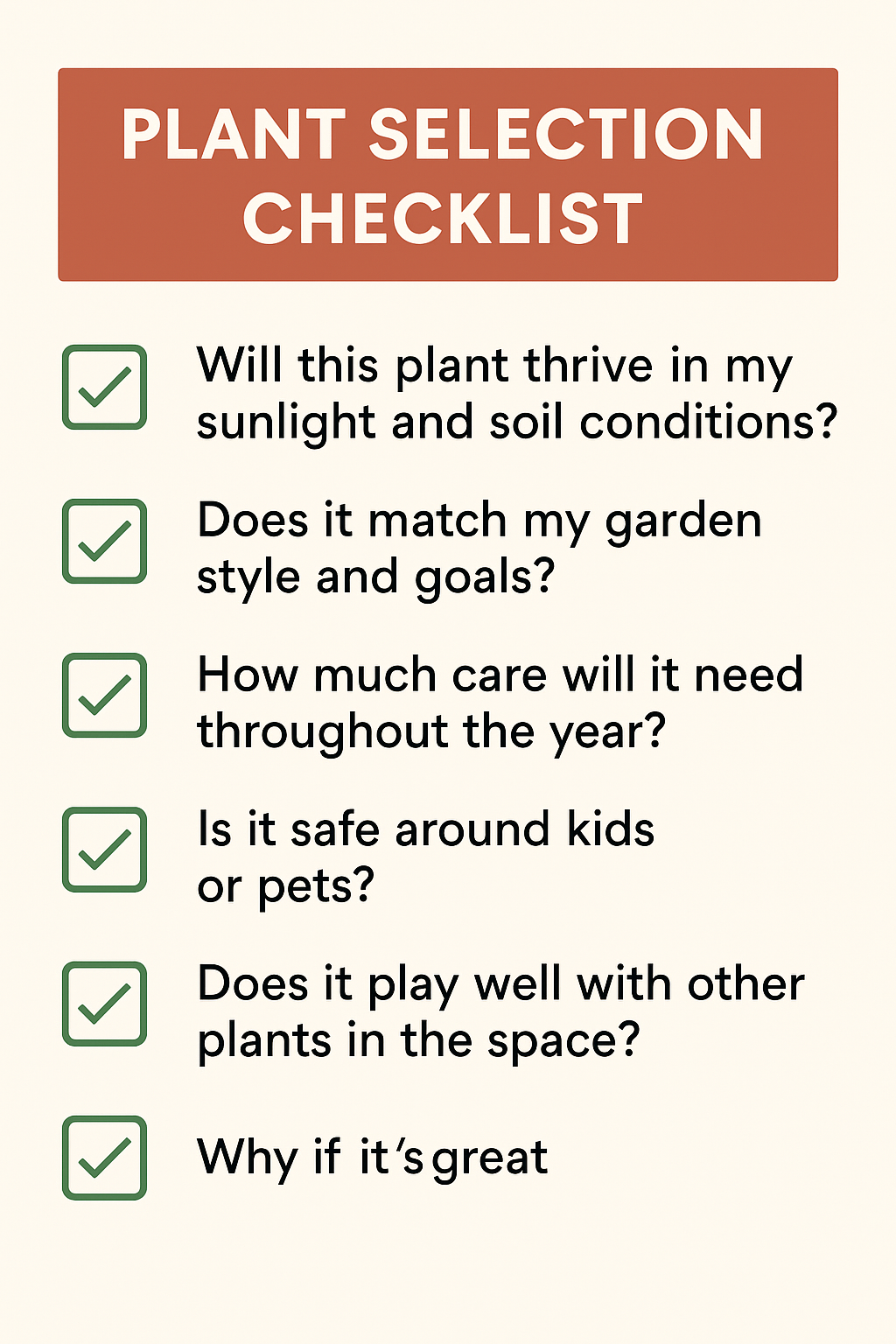
Before buying, ask yourself:
✅ Will this plant thrive in my sunlight and soil conditions?
✅ Does it match my garden style and goals?
✅ How much care will it need throughout the year?
✅ Is it safe around kids or pets?
✅ Does it play well with other plants in the space?
FAQs About Selecting Garden Plants
Q1: Can I grow tropical plants in a temperate zone like New Jersey?
A: You can grow tropicals like cannas or elephant ears in pots and bring them indoors in winter, but they won’t survive outside year-round.
Q2: What if I have poor soil?
A: Start by improving the soil with compost and organic matter. Raised beds and container gardening are also excellent alternatives.
Q3: How many plants should I start with?
A: It depends on your space. For beginners, 8–10 mixed plants is a good start. Leave enough room for growth.
Q4: Can I plant in any season?
A: Spring and fall are ideal for most planting. Avoid the extreme heat of midsummer or the frozen ground in winter.
Q5: What plants should I avoid as a beginner?
A: Avoid highly invasive species, high-maintenance roses, or exotic plants that don’t suit your climate zone.
Conclusion
Choosing the best plants for your garden doesn’t have to be overwhelming. With a little planning, the right tools, and a basic understanding of your space, you can create a garden that’s beautiful, resilient, and rewarding.
Remember to:
- Analyze your garden environment
- Define your goals and aesthetic
- Mix plant types for structure and color
- Plan for seasonal changes
- Always check plant compatibility and care needs
🌿 For more garden design tips, organic lawn care advice, and backyard inspiration, visit smallbackyardideas.com—where small spaces grow into something extraordinary.