
Bar-Height vs. Counter-Height Kitchen Countertops: Which One is Best for You?

smallbackyard_admin
- May 19, 2025
- 5 Min Read

When designing a kitchen, one of the most important decisions you’ll make is about your countertops. Not just what material you want—like granite, marble, or laminate—but also how high you want the countertop to be. Believe it or not, the height of your countertops can affect not only the way your kitchen looks but also how you use the space.
There are two main heights to think about: bar-height countertops and counter-height countertops. Each has its own benefits, so let’s dive into what makes them different and help you decide which one works best for you and your kitchen.
What’s the Difference Between Bar-Height and Counter-Height?
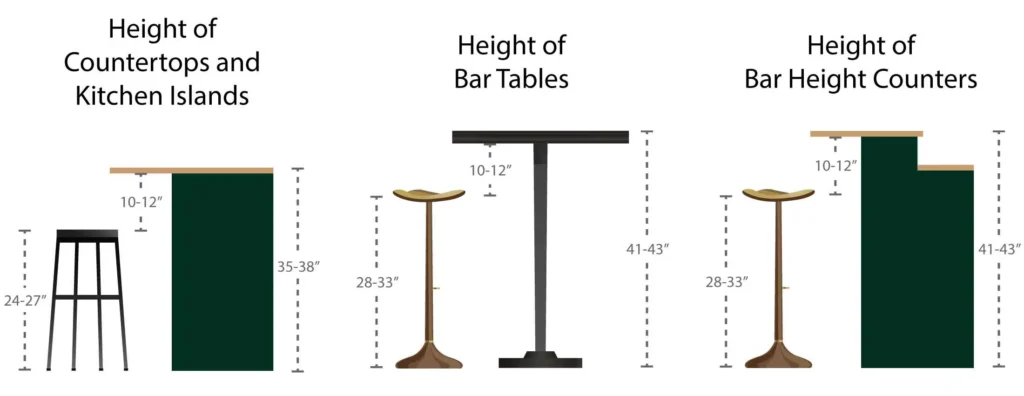
Counter-Height Countertops are the most common option and what most people have in their kitchens. These countertops are usually between 34 and 36 inches tall. This height is comfortable for most people and is great for working in the kitchen. If you’re preparing food, washing dishes, or doing anything else on your countertops, it’s easy to reach without straining.
Bar-Height Countertops, on the other hand, are 40 to 42 inches tall. These countertops are a little higher than standard counters and are often used for kitchen islands. Bar-height countertops are designed for more casual settings—perfect for standing around or sitting on a stool to chat with friends while someone’s cooking.
Pros and Cons of Counter-Height Countertops
Pros:
- Comfortable for most people: The average height of counter-height countertops is ideal for everyday kitchen tasks, like chopping vegetables or stirring a pot on the stove. It’s also easy for most people to stand or sit at while working.
- Great for families with young children: Since counter-height is lower, it’s easier for kids to reach and interact with the kitchen. Whether they’re helping you bake cookies or just sitting at the counter eating a snack, it’s comfortable for them.
- Opens up small spaces: Counter-height countertops can make a kitchen look bigger and more open. If you have a smaller kitchen, counter-height is a great choice because it doesn’t overwhelm the space.
Cons:
- Not as comfortable for taller people: If you’re on the taller side, counter-height may not be as comfortable for long tasks. You might feel like you’re bending over too much, which can lead to discomfort after a while.
- Less storage space underneath: While you may have plenty of storage in the cabinets under counter-height counters, you won’t have as much room as you might with bar-height countertops, which tend to give you more clearance.
- Doesn’t create a social space: Counter-height isn’t usually built for socializing or gathering around. If you enjoy chatting while cooking or hosting gatherings, counter-height might not give you the kind of interaction you’re looking for.
Pros and Cons of Bar-Height Countertops
Pros:
- Perfect for socializing: Bar-height countertops are great for creating a space where people can gather. You can comfortably stand and chat with friends while preparing meals, or your guests can sit on stools around the kitchen island and interact with the cook.
- Better for taller people: If you’re taller, bar-height countertops are more comfortable. The height allows you to work without having to bend over, which can reduce strain on your back and arms.
- More storage space: Bar-height countertops are usually designed with more space underneath, so you can store more things out of sight. If you have a lot of kitchen items you want to keep hidden, this can be a huge advantage.
- Hides clutter: If you like to keep your kitchen tidy, bar-height countertops are great because they allow you to hide things like dishes or kitchen messes behind the counter. This is especially useful if you have an open-plan kitchen where guests can see into your kitchen from the living room.
Cons:
- Less accessible for kids and people with mobility issues: Bar-height countertops are harder to reach for younger children, and people who have trouble moving or standing for long periods of time may find it difficult to use bar-height areas comfortably.
- Takes up more visual space: Since bar-height countertops are taller, they can make a small kitchen feel more cramped or block sightlines, especially in tight spaces.
- More expensive: Bar-height countertops tend to cost more than counter-height ones because they require more materials to build and install. If you’re on a budget, this might be a consideration.
Which One Should You Choose?
When choosing between bar-height and counter-height countertops, think about your budget, kitchen layout, and how you use your kitchen. Here’s a quick breakdown of what to keep in mind:
Budget: If you’re looking for something more affordable, counter-height countertops are your best bet. Since they are the standard height, they’re more budget-friendly, and you’ll have more material and style options.
Kitchen Layout: For smaller kitchens, counter-height is better because it won’t take up as much space and will keep things feeling open. For larger kitchens, especially with open-plan designs, bar-height can help divide the space and give you more storage.
Use of the Kitchen: If you love entertaining and having friends and family hang out in the kitchen, bar-height countertops might be your best choice. If you need something practical for everyday tasks or have a young family, counter-height might be the better option.
How Much Do Countertops Cost?
The cost to install countertops depends on the size of your kitchen and the materials you choose. On average, installing new countertops can cost anywhere from $1,840 to $4,386. The type of material is a huge factor in this price. For example, cheaper materials like ceramic may cost around $1 to $15 per square foot, while pricier materials like marble can range from $15 to $190 per square foot.
If you’re doing the work yourself, you can save on labor costs. However, installing countertops is a difficult job that requires skill and precision. If you’re using heavy materials, like granite or stone, it might be worth hiring a professional to avoid mistakes and damage.

![How Much Does It Cost to Paint Kitchen Cabinets? [2025 Data]](https://smallbackyardideas.com/wp-content/uploads/2025/05/9c4d13d3-2ca9-485e-9c46-4af69aee7765.jpg-1.jpg)

![How Much Does Kitchen Cabinet Installation Cost? [2025 Data]](https://smallbackyardideas.com/wp-content/uploads/2025/05/e781c3e1-e0c9-4ce7-8e99-85a7e66370a3.jpg-scaled.jpg)